Link-Belt 218 lattice crawlers serve the operator
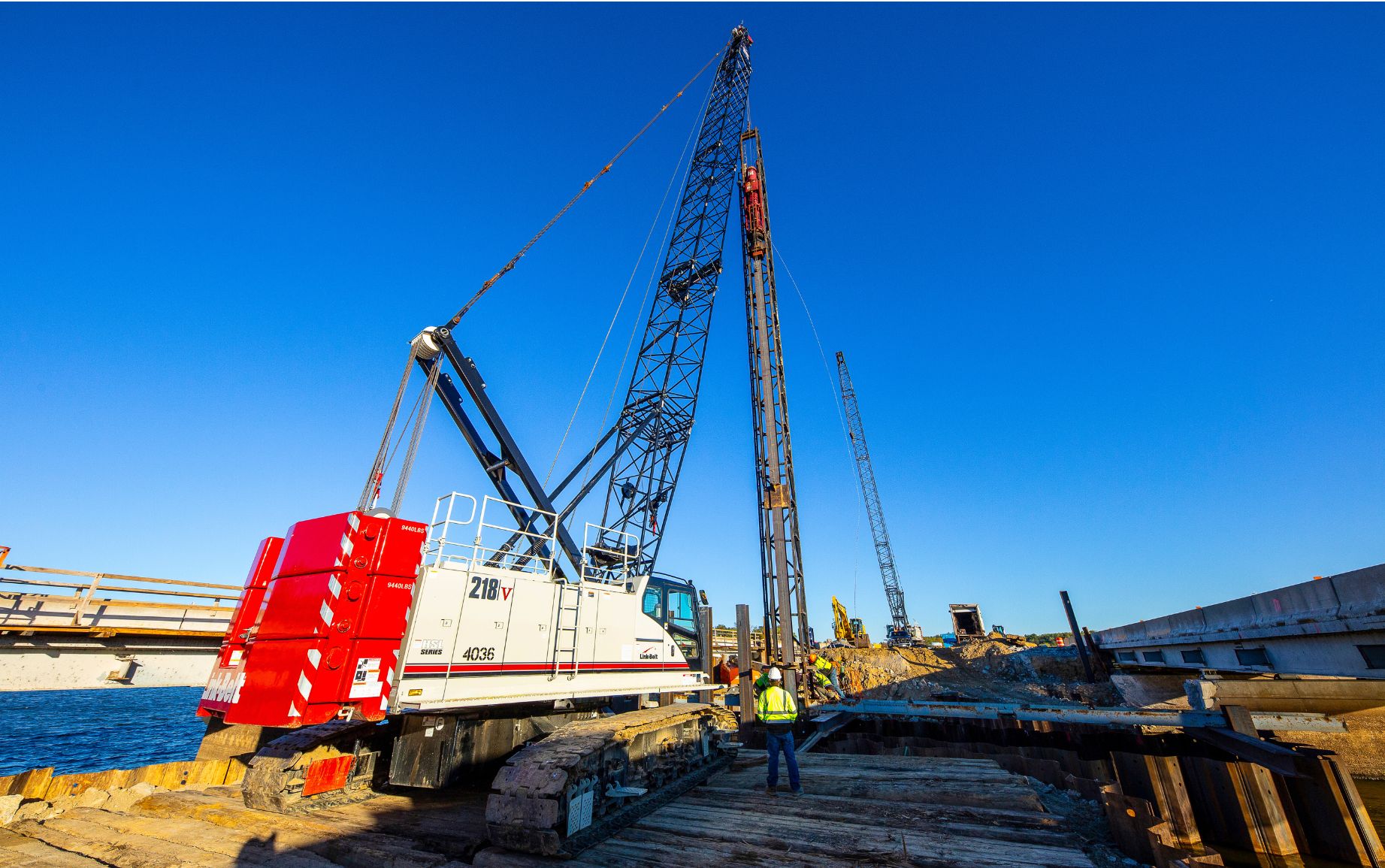
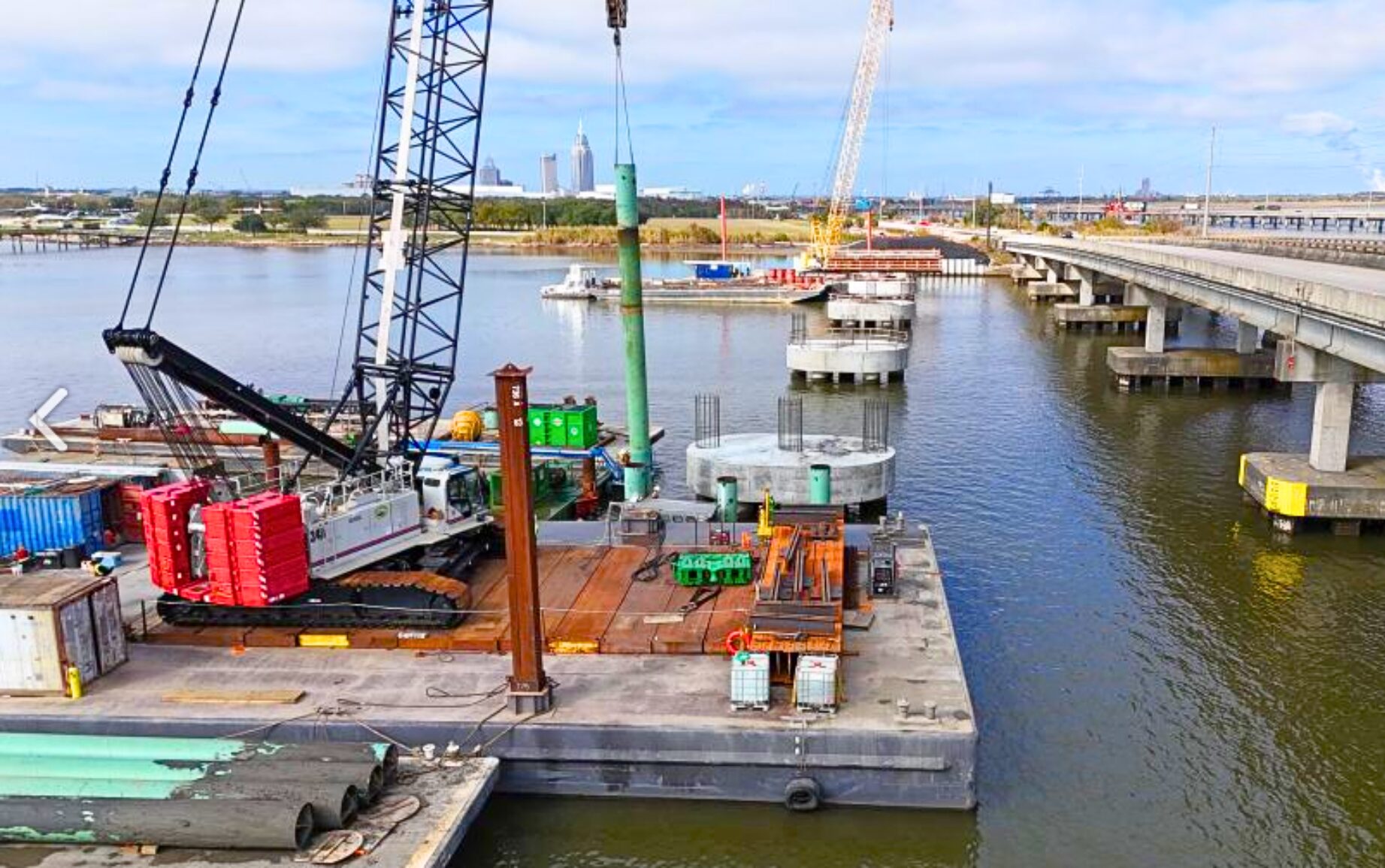
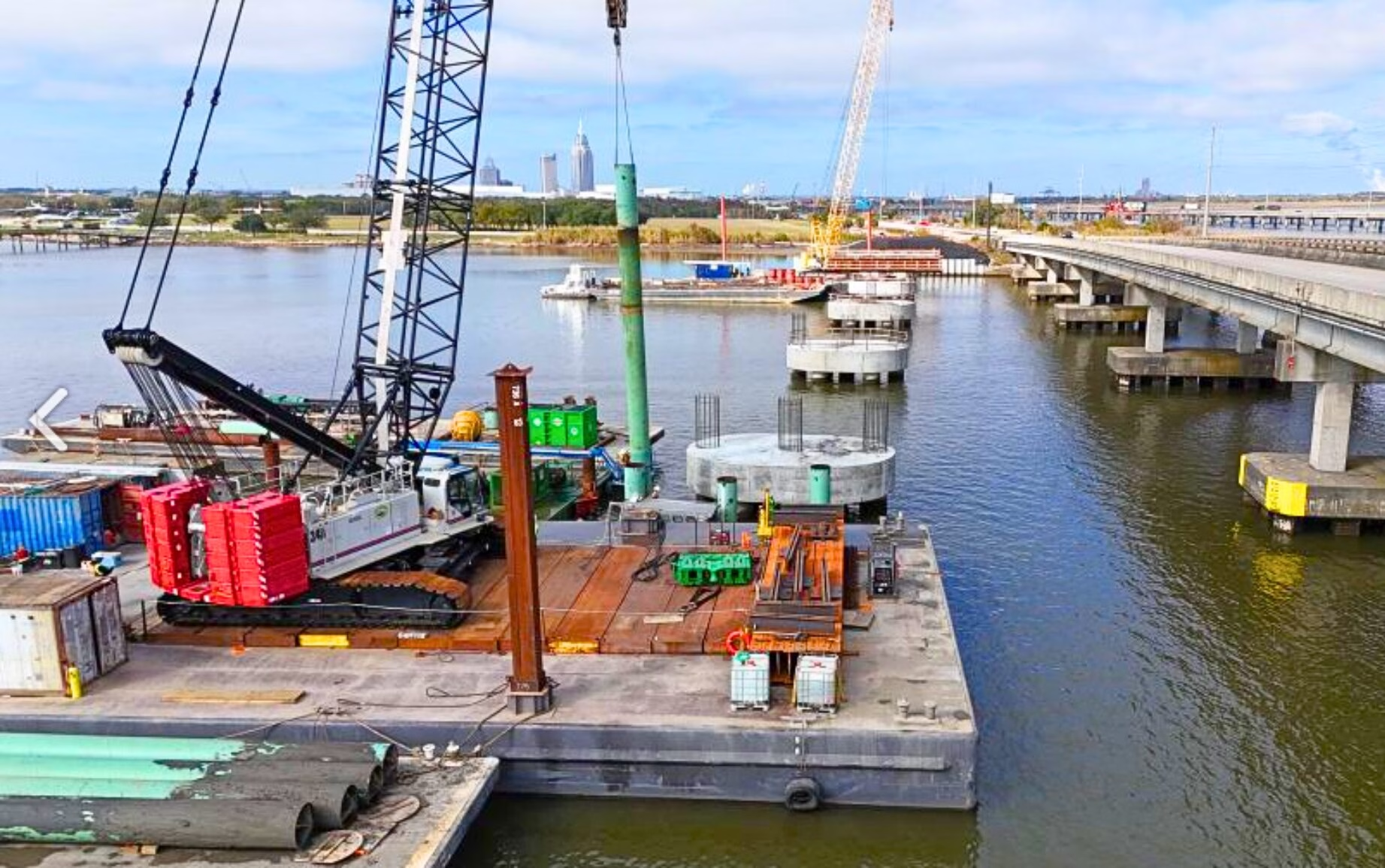
The Link-Belt Cranes 218 HSL and 218|V share a strong foundation in the 110-ton lattice crawler market. Both cranes are currently supporting E.T. Simonds Construction Company as it completes a portion of the nearly $325 million I-57 expansion project in southern Illinois. The work includes replacing structures over Marcum Branch and Gun Creek in Whittington, Illinois, along with widening the interstate corridor to six lanes.
Supervisor and foreman Ronnie Coy of E.T. Simonds said the 110-ton Link-Belt lattice crawlers are handling a wide range of tasks on the jobsite, including driving pile in cofferdam abutments, setting cages, and rebar forms.
“For what we do, these cranes offer excellent capacities,” Coy said. “We move them around quite a bit and transport each model in only four loads.”
The Link-Belt 218 series has long been recognized for its strong duty cycle performance and lifting capacities. The 218|V was introduced in 2023, building on the original 218 HSL design that debuted in 2005. While many proven design elements were carried over, the 218|V features updates that enhance the operator’s experience, machine capabilities, and self-assembly. Among these updates is a 12-inch HSL-2 touchscreen display that provides live ground bearing pressures, intuitive navigation, and advanced diagnostic capabilities, allowing operators to monitor machine performance and all lifting data in real time.
Another key enhancement on the 218|V is the design of standard power pack lugs, which allow end users to mount a custom-designed power pack frame on the rear of the upper crane’s frame. With support from Link-Belt product support and engineering, this option streamlines frame design while ensuring the crane remains within its rated capacities.
“Any time you can get in a Link Belt, it’s a good thing,” said operator Frank Molt. “As far as being in the operator’s seat, they’re what I like.”
One feature carried over from the 218 HSL to the 218|V is the drum speed and swing speed dial controls, conveniently located next to the operator’s seat. These allow operators to fine-tune hydraulic pump flow to individual functions and remain a favorite among experienced operators.
Molt added that both cranes deliver smooth swing performance and precise drum control, noting they are particularly user friendly during self-assembly and disassembly. From an operator’s standpoint, he said Link-Belt cranes simply make the job easier.
“Link-Belt really serves the operator,” Molt said. “They think about what a crane will be like on the job, not just selling cranes.”
 Facebook
 X (Twitter)
 YouTube
 Instagram