Link-Belt crawler fleet manages modular construction site
Link-Belt Cranes crawlers are at the center of State Service modular construction operations.
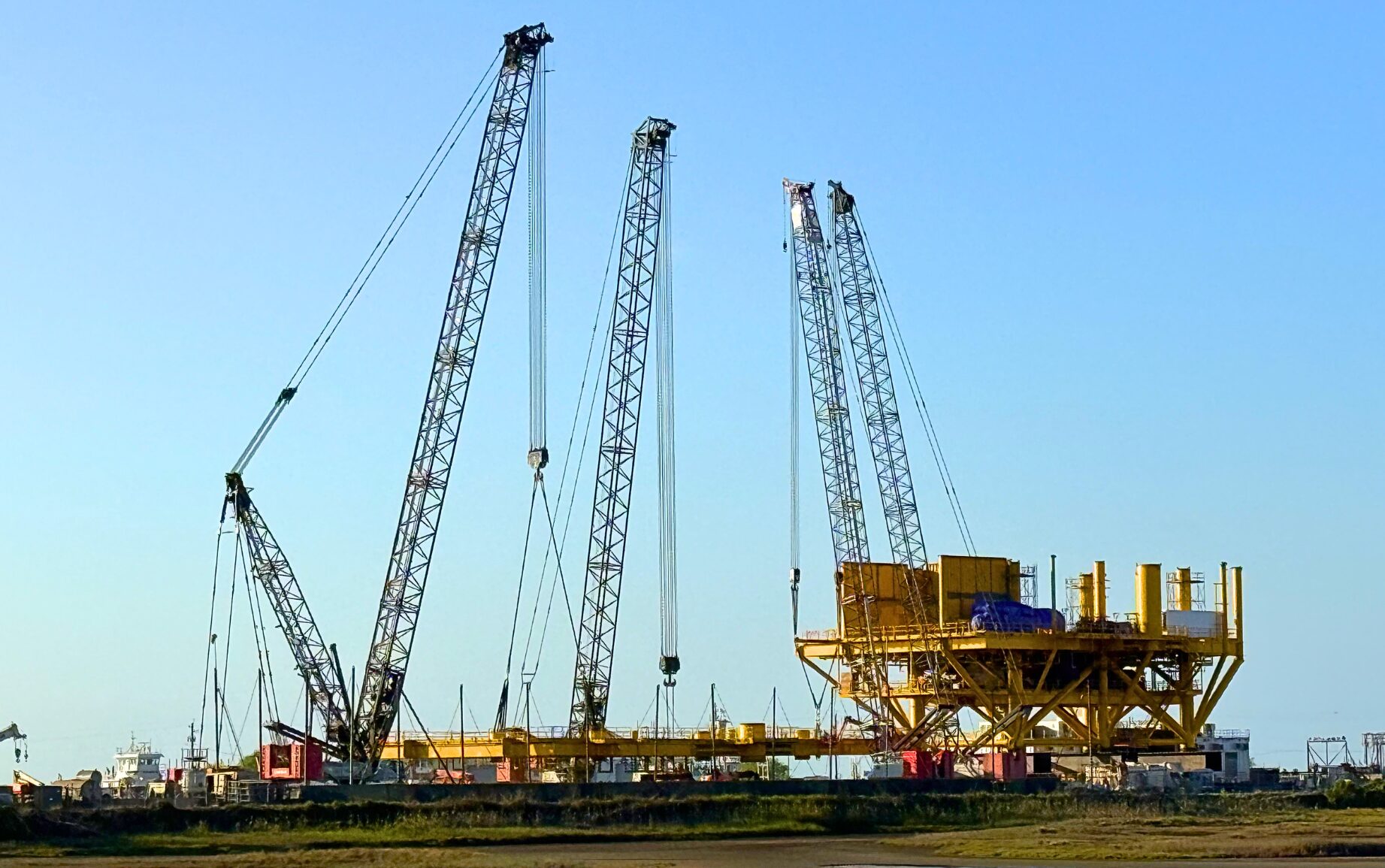
Based in Ingleside, Texas, State Service utilizes a fleet of Link-Belt crawlers at an offshore drilling platform site. The fleet includes two 300-ton 348 Series 2s, a 238 HSL, two TCC-800s, and two 500-ton 548 rigs.
Together, these cranes lift steel components weighing up to 600 tons. These components are part of massive structures built to withstand punishing conditions like extreme winds and turbulent waters. This configuration of machines is able to lift steel platforms that are over 100 square feet by 10 feet high, raising them 50 feet over the lower portions of the drill rig.
Modular construction is an increasingly popular application for its capacity to streamline project execution, deliver faster, and enhance access to customizable solutions to oil and gas clients at a cost-effective rate. When it comes to modular components, State Service Manager and Rigging Superintendent Thomas Angleman said reach is more important than capacity.
“With this work, the footprint of the crane is critical,” Angleman said. “Where the modules are closer together, you can use a 100-ton to 300-ton crane rather than something bigger. The smaller crane usually is more maneuverable and quicker to get into more accessible locations around the site.”
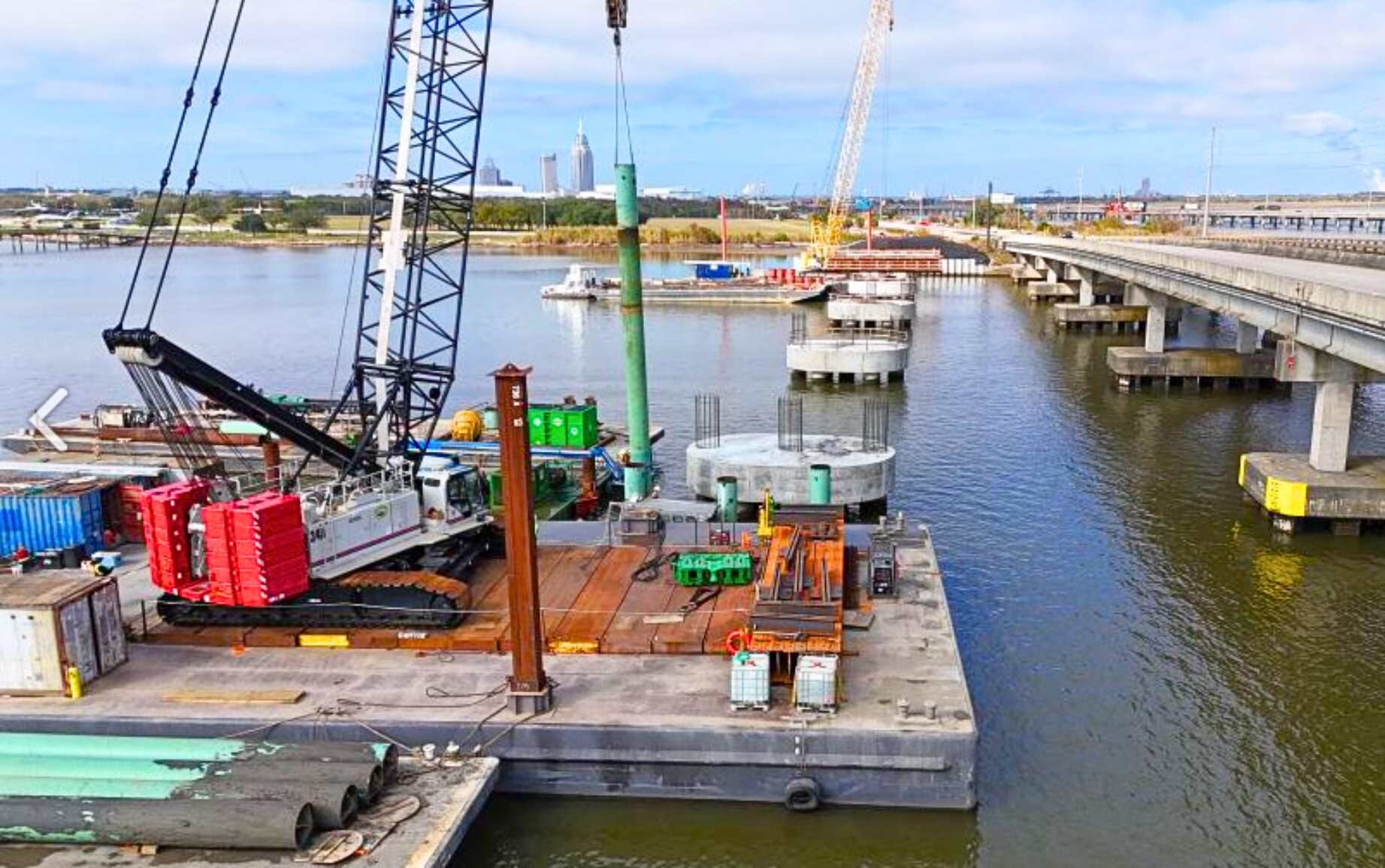
State Service’s modular construction work is led by its 348 Series 2s, its 238 HSL, and its two TCC-800s, which build modular components for a liquified natural gas plant off-site. Once these modules are finished, they’re driven onto adjacent barges with self-propelled modular trailer transporters and then assembled at a permanent facility nearby.
These modules are usually 60 feet tall but vary from 120 to 200 feet long. They may also be 24 to 40 feet wide and maintain a separation on-site by as much as 15 feet apart. State Service Maintenance Supervisor Ted Little said the Link-Belt TCC-800 telecrawlers can scope and reach into the modules on account of their telescopic booms, which is a real benefit.
“They move really well through the yard,” Little said. “We do a lot of picking and carrying, and we run a lot of equipment from one end to the other over a local 10-acre site.”
He added that Link-Belt’s LMI touchscreen technology is simple to configure and easy to troubleshoot for all your function needs, noting that Link-Belt’s cameras package ensures proper operation is always in order. State Service operator Lance Jones contributed that the 348 Series 2s are great for modular lifts at the offshore site.
“The Link-Belts are a stout crane for what they can do, especially the 348 Series 2,” Jones said. “It can pick everything that we have out here with ease, and it can fit into pretty tight spaces.”
Jones said the 238 HSL is superb for pick and carry efforts. The crane’s winch speed controls make critical lifts smooth, as well, and the machine can even complete multi-function swing, boom, and hoist tasks. He mentioned that it performed exceptionally when lifting a 65,000-pound, 80-foot-long heavy-duty pipe joint.
“It travels really good, and it picks and carries well,” Jones said. “The heaviest pick and carry load was about 70,000 pounds so far.”
B-C Equipment Sales of Corpus Christi, Texas, handled delivery of these machines as part of Link-Belt’s vast support network.
 Facebook
 X (Twitter)
 YouTube
 Instagram