Link-Belt 348 lattice crawler assists water facility upgrade
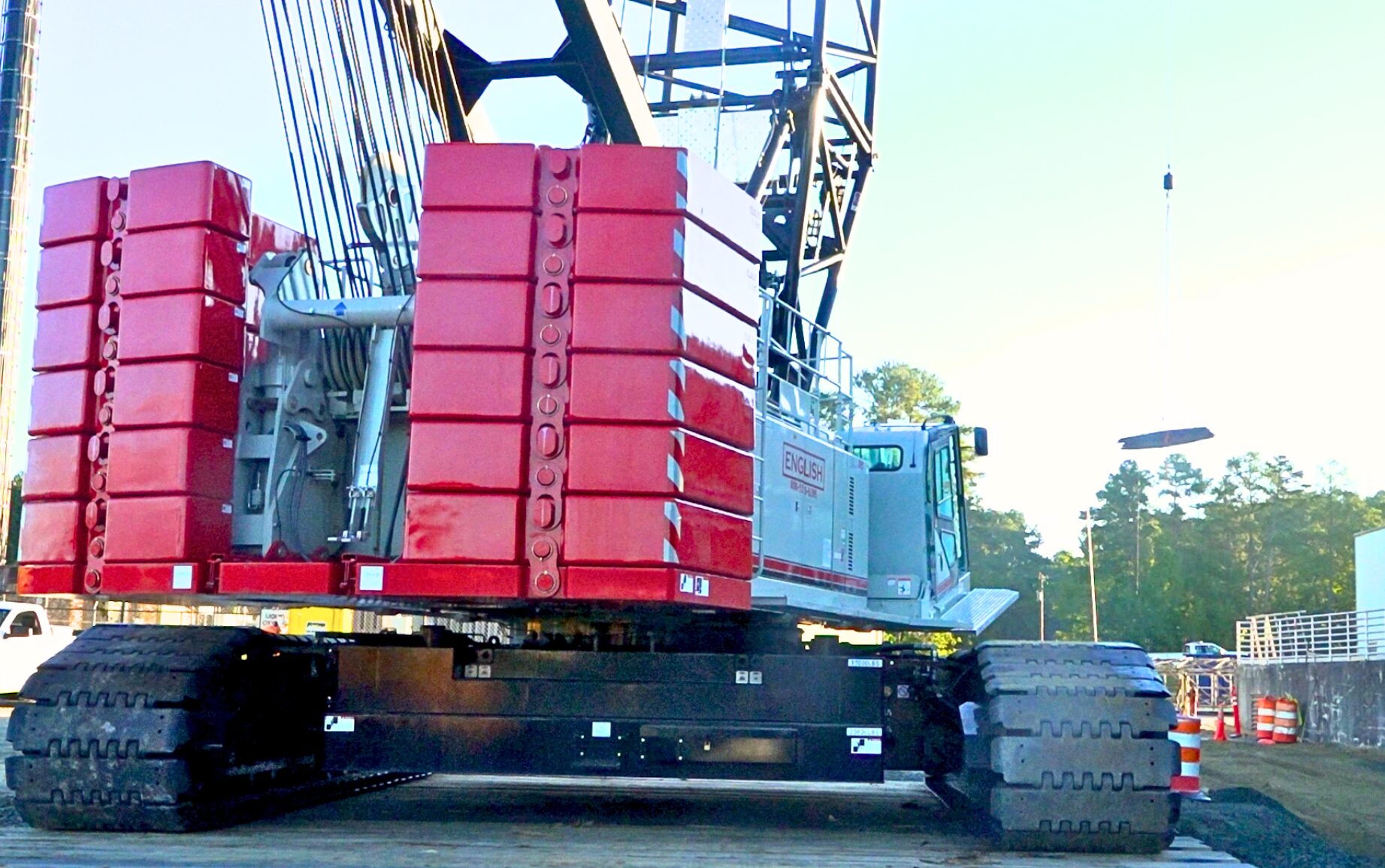
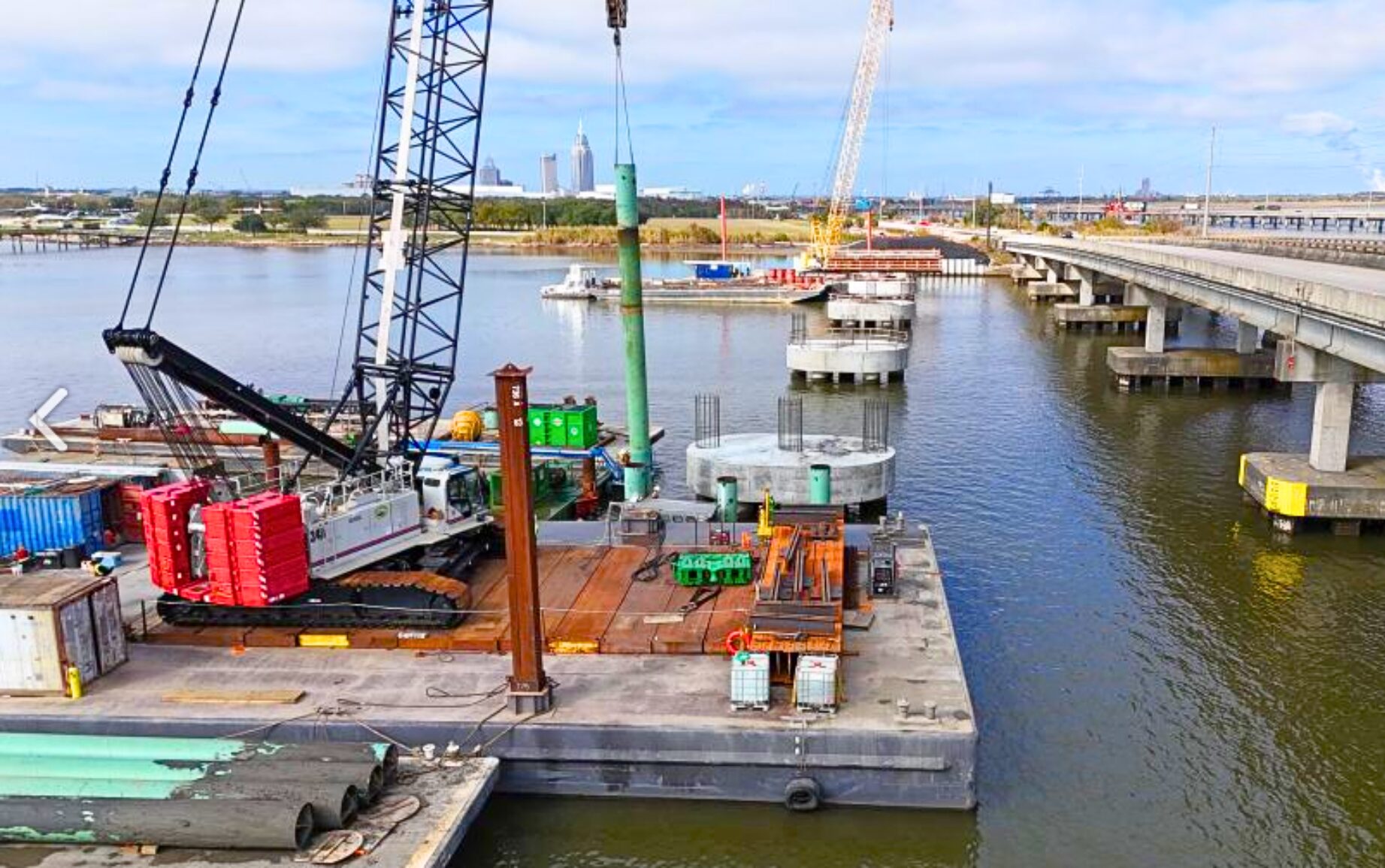
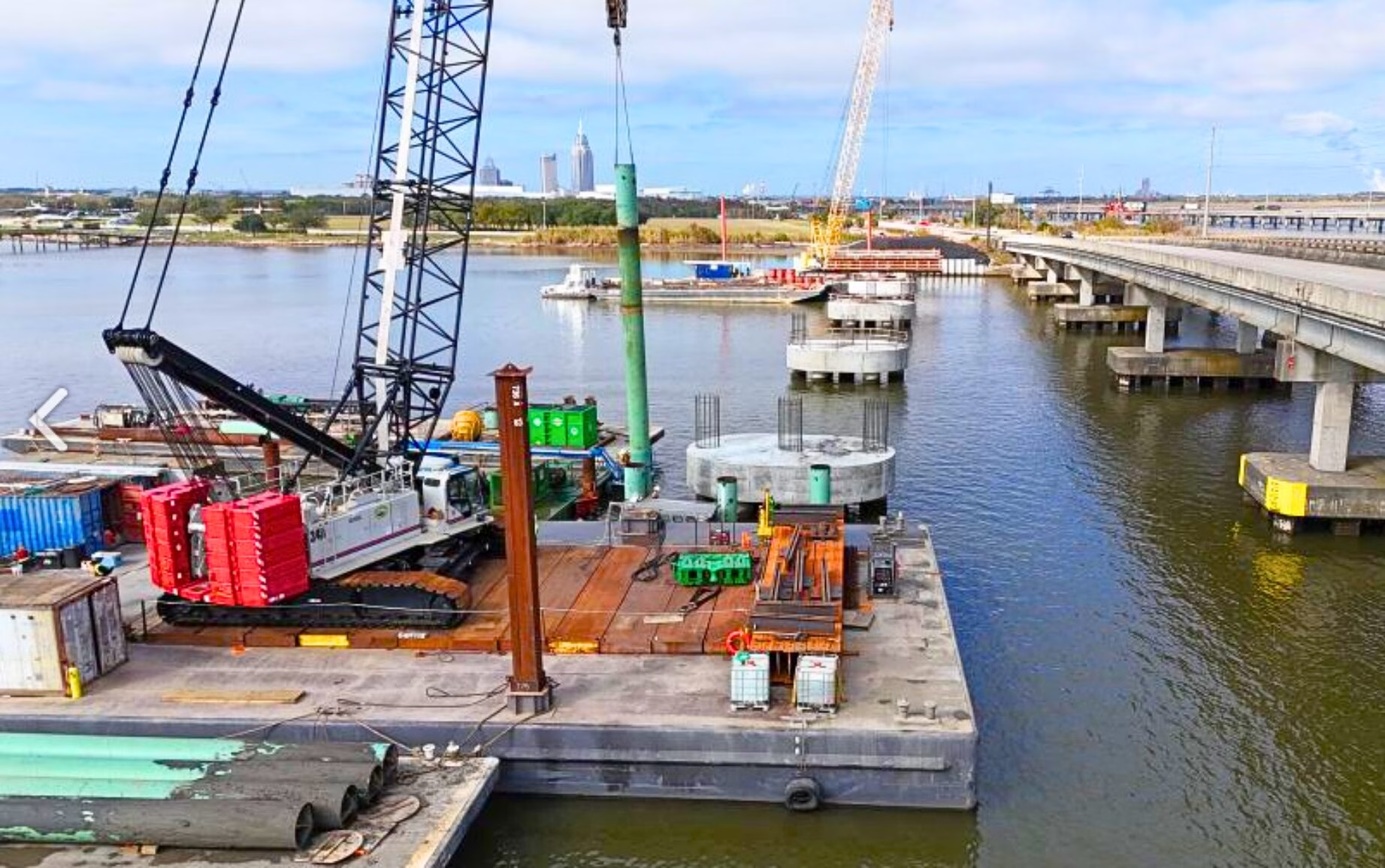
A 300-ton Link-Belt Cranes 348 Series 2 crawler crane is critical to the reconstruction of a water treatment facility in Raleigh, North Carolina. Led by English Construction of Lynchburg, Virginia, the nearly $50 million project will produce around 25% more clean water for the local population.
Located at the E.M. Johnson Water Treatment Plant, which currently provides about 90% of Raleigh’s potable water, the crane is working to dismantle, reconstruct, and demolish 60-year-old sedimentation basins and ancillary pipe systems true to the original plant. By removing all old equipment and installing updated basins and piping, the project aims to increase its clean water production from 90 million gallons per day to 120 million gallons per day.
To accomplish this, the 348 Series 2, equipped with 140 feet of main boom, 180 feet of luffing jib, and 80 feet of fixed jib, is lifting materials such as a 74-foot, 19,000-pound rake arm/bridge and a 9,000-pound plate settler, which will replace the rake arm. English operator Tim Tebbe said the crane has served the project above and beyond.
“The 348 Series 2 is good for this job because it gives us enough capacity and reach to complete every task out here,” Tebbe said. It has the picking power you need, and it has been performing great.”
From assembly and disassembly of the boom and counterweights to swing and winch functions, he said everything is smooth and quick. The crane’s user-friendly Link-Belt HSL-1 LML system and camera views make it a top-notch machine.
“I would recommend the 348 Series 2 for its ease of assembly and disassembly and its perfect function as you’re working. It swings smooth, the functions are smooth, and it has a good chart,” Tebbe said. “It’s just a great machine. Hands down.”
Michael Collier, general superintendent of the North Carolina Utilities Division, echoed this sentiment, noting the continued success of English’s relationship with Link-Belt cranes.
“The 348 Series 2 has been an excellent addition to the EMJ project, including the quality service Link-Belt has provided to English throughout many years,” Collier said.
With an estimated two and a half years before the project is complete, having already contributed four years of work, Tebbe said the 348 Series 2 remains vital to English’s operations. He attributed this to the machine’s ability to handle all matters of work, including picking and carrying at a moment’s notice.
“We pick and carry with the 348 Series 2 when we need to,” Tebbe said. “It mostly doesn’t even feel it.”
 Facebook
 X (Twitter)
 YouTube
 Instagram